If I want to integrate the P-70 with my own battery and hardware system, what is the supported input voltage range?

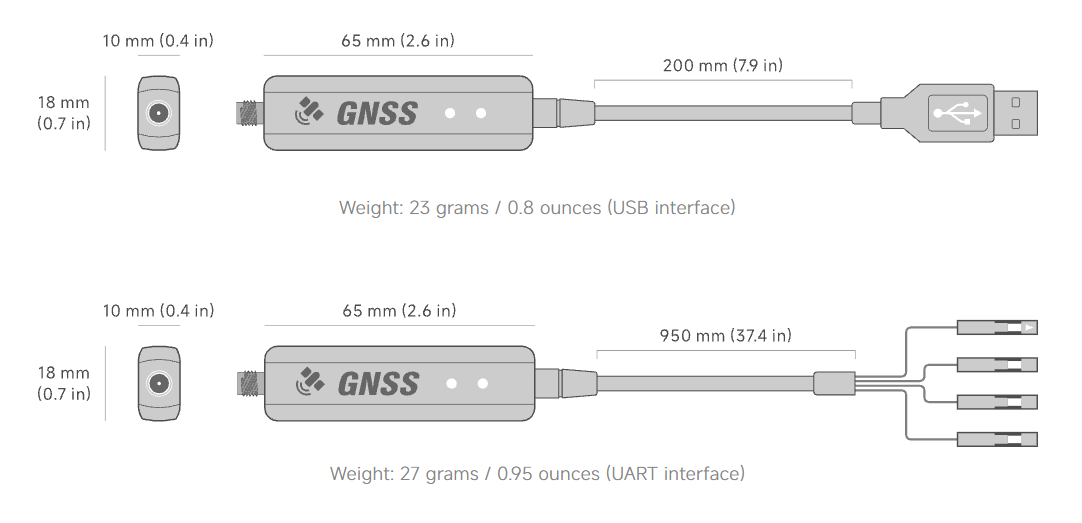
Quote from GPSWebShop Official on June 8, 2026, 10:14 amThe P-70 is available in two interface versions: USB and TTL (UART).
USB Version
- Safe input voltage range: 3.3V to 6.0V
- Recommended operating voltage: 3.6V to 5.5V
TTL (UART) Version
- Safe input voltage range: 3.0V to 6.0V
- Recommended operating voltage: 3.3V to 5.5V
Important:
The supply voltage should never exceed 6.0V, as applying a higher voltage may permanently damage the device.
The P-70 is available in two interface versions: USB and TTL (UART).
USB Version
- Safe input voltage range: 3.3V to 6.0V
- Recommended operating voltage: 3.6V to 5.5V
TTL (UART) Version
- Safe input voltage range: 3.0V to 6.0V
- Recommended operating voltage: 3.3V to 5.5V
Important:
The supply voltage should never exceed 6.0V, as applying a higher voltage may permanently damage the device.

Quote from anonymous on June 19, 2026, 4:17 pmAppreciate the information. One additional question for the engineering team; are there any concerns with locating the receiver, battery and the antenna in a plastic enclosure such that they would all be in very close proximity? We would like to package it with some other electronics in a sealed plastic enclosure but wanted to make sure they did not have any concerns.
Appreciate the information. One additional question for the engineering team; are there any concerns with locating the receiver, battery and the antenna in a plastic enclosure such that they would all be in very close proximity? We would like to package it with some other electronics in a sealed plastic enclosure but wanted to make sure they did not have any concerns.
Quote from GPSWebShop Official on June 19, 2026, 4:19 pmThe antenna and receiver can be installed together inside a suitable enclosure.
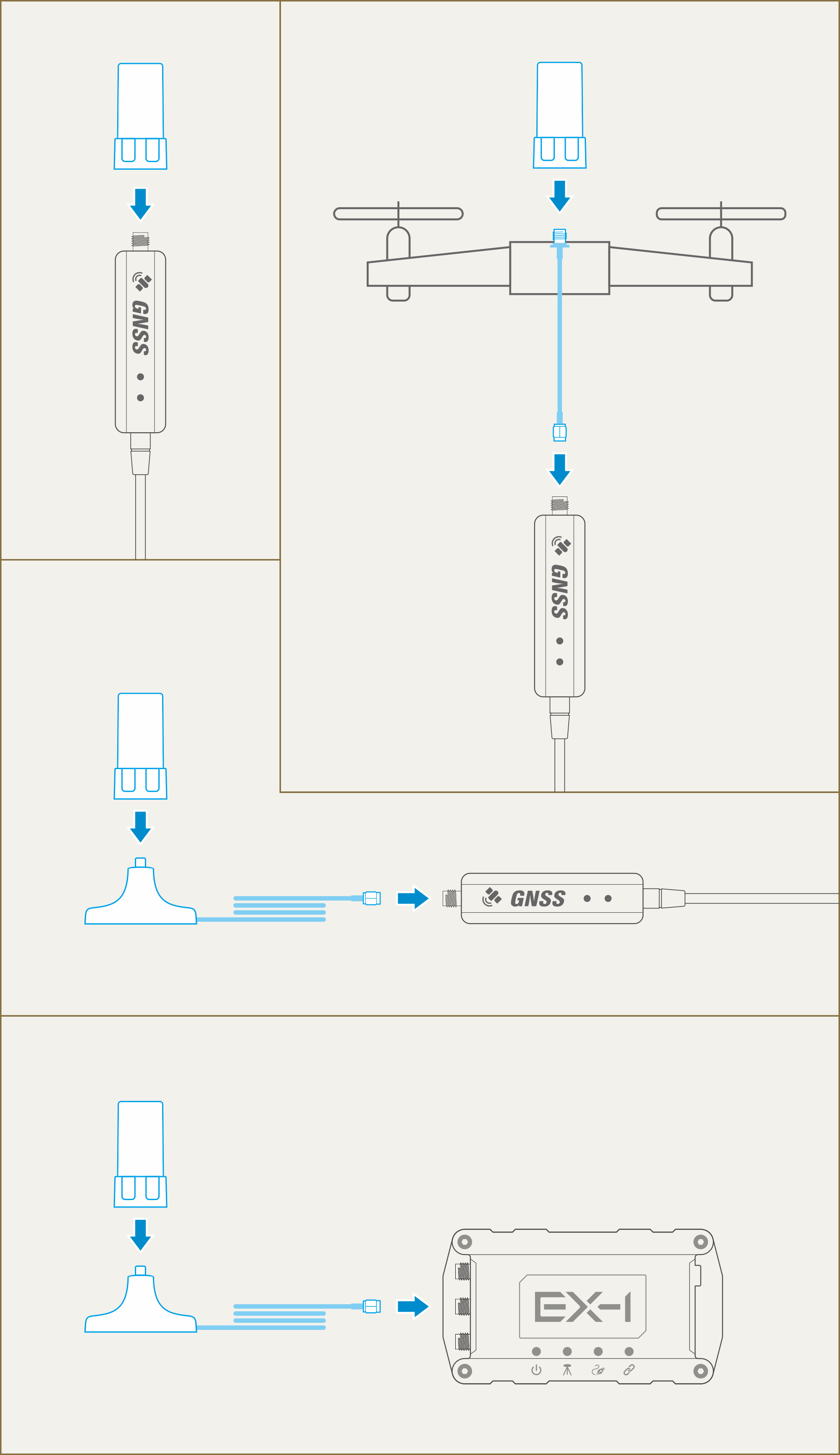
The receiver may be placed directly beside the antenna, or underneath it. However, the receiver should not be placed above the antenna.
If you need to shorten the external antenna cable, please leave at least 15–20 cm (6–8 inches) of cable attached. Do not cut the cable too short, as an excessively short cable may overload the GNSS receiver with a signal that is too strong.
If better signal performance is required, you may also consider the HAK-1 antenna kit. It does not require a cable and mounts directly on top of the receiver. It is ideal for installations where there is no metal ground plane beneath the antenna.
The antenna and receiver can be installed together inside a suitable enclosure.
The receiver may be placed directly beside the antenna, or underneath it. However, the receiver should not be placed above the antenna.
If you need to shorten the external antenna cable, please leave at least 15–20 cm (6–8 inches) of cable attached. Do not cut the cable too short, as an excessively short cable may overload the GNSS receiver with a signal that is too strong.
If better signal performance is required, you may also consider the HAK-1 antenna kit. It does not require a cable and mounts directly on top of the receiver. It is ideal for installations where there is no metal ground plane beneath the antenna.